Sclerotia
Mycelium structures where nutrient reserves accumulate.
 Ceramyca
CHAPTER 18 / 23
All chaptersSee how mycelium builds reserves, how the cold period fits into the season and what to observe between incubation and fruiting.
Mycelium structures where nutrient reserves accumulate.
The cold phase of the autumn–spring route, which helps to prepare the fruiting.
Mycelium mobilizes resources from the rich to the poorer environment. The sclerotia correspond to reserve structures: the aspect of the bed evolves as they are formed.
The maturation marker of the Ceramyca route, depending on the climate. It concerns the sequence of constitution of reservations.
For PRO PODs. Complementary nutrition can still be connected as long as mycelium remains white and expanding. The transition to gold marks another phase: follow the evolution of reserves, without automatically prolonging contributions. Find connection markers
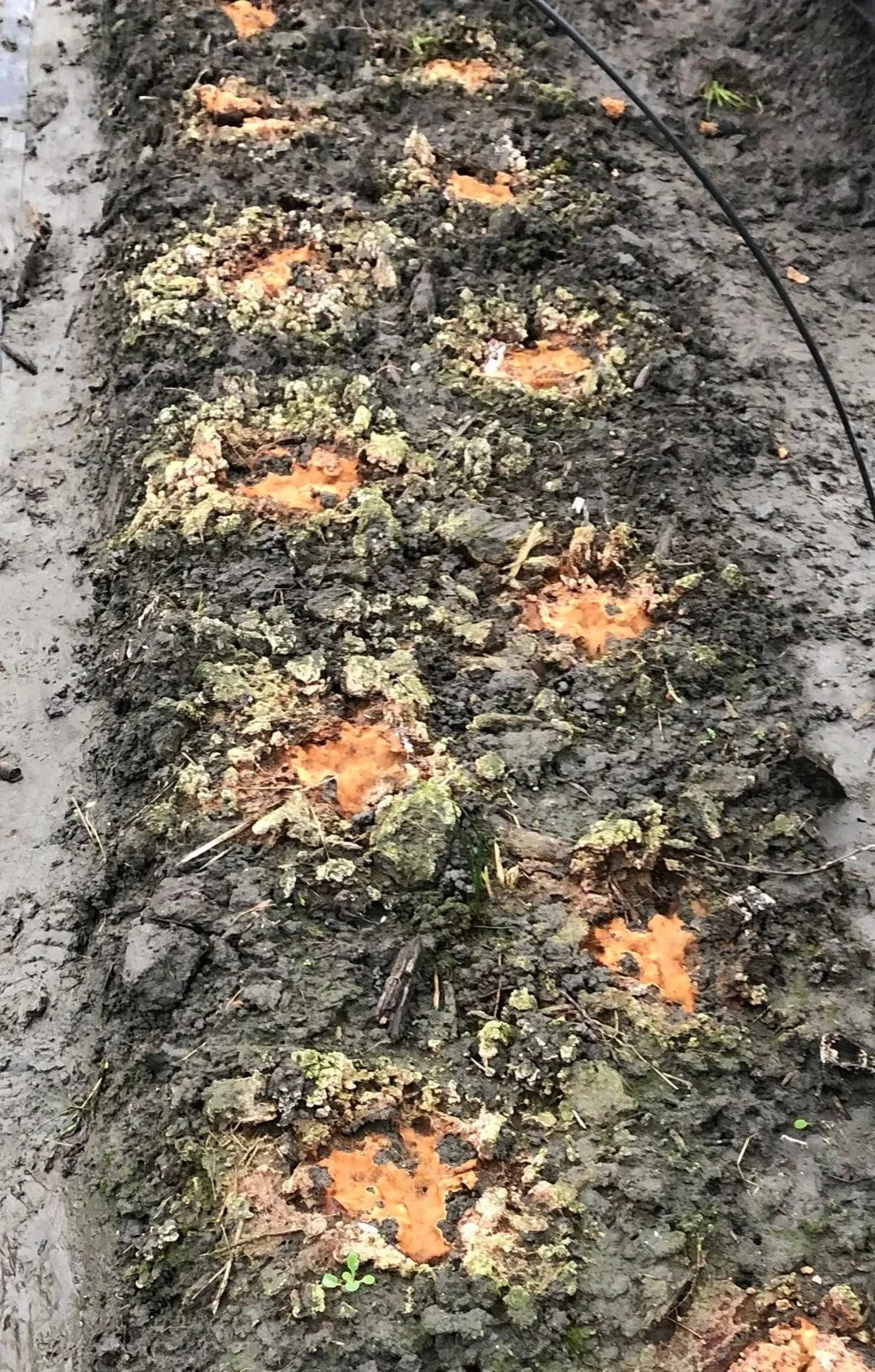
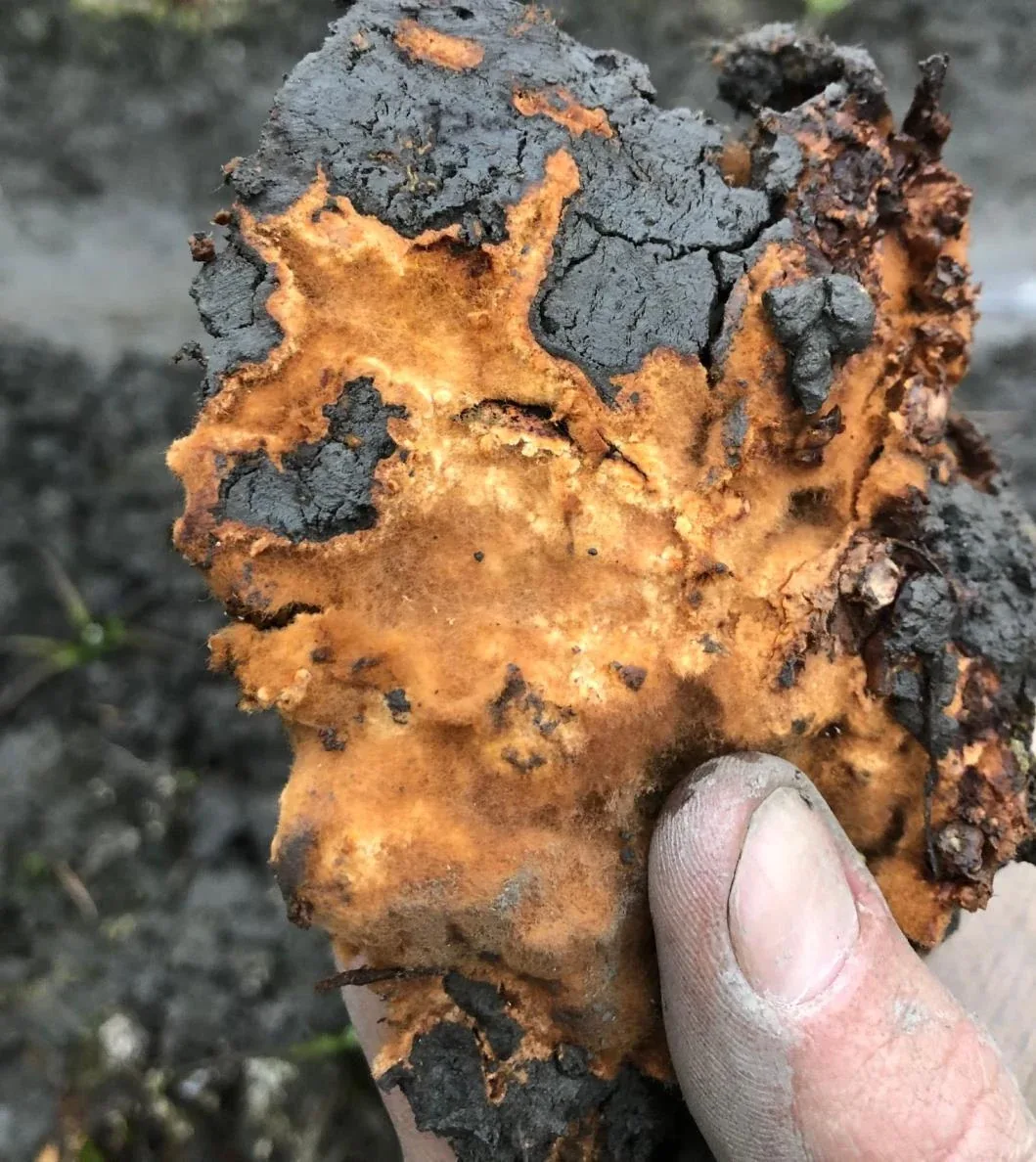
With PODs, sclerotia follow the initial development of the surface mycelium. They are mostly located in the collision zones between the spreading patches of neighbouring PODs.
This early growth near the surface places the sclerotia just below the top centimeter of soil. Only later does the mycelium colonize the deeper layers of the bed.
SHORT-TERM CONDUCT POD
First the surface, then the reserves, then the depth. POD directs the initial development of mycelium to the surface. Traditional sowing, in poquets or furrows, directly introduce mycelium into the earth. With the PODs, the deep colonization of the bed occurs in a second stage, after the installation of the superficial sclerotia.
The constitution of reserves and the vernalisation describe two aspects of the route: one concerns mycelium and its nutrition, the other the passage through the cold period.
In the fall–spring driving, winter cold and the evolution of temperatures and humidity contribute to the transition to fruiting. Follow the season taking into account your species and the conditions actually observed.
INSTALLATION AND MATURATION
Mycelium develops, accesses nutrition and puts resources in reserve in sclerotia.
COLD PERIOD
The passage through the cold is part of the preparation of the fruiting of the morels of the autumn–spring route.
PRINTANARY REPRISE
The evolution of temperatures and humidity accompanies the transition to fruiting.
In a growing trial with Morchella importunaHao and his colleagues describe a phase of mycelium growth, a phase of cold maintenance, and the development of young fruitings.
Hao et al., 2019 · AMB ExpressThe apparent slowing of the plot is accompanied by concrete follow-up: water, protections and temperature change.
Keep a wet surface and monitor the condition of the soil. If an input is needed, prefer the aisles to feed the beds by capillary.
Adapt wateringCheck the fixations and condition of the covers, especially after an episode of wind or heavy precipitation.
Find the protectionsContinue monitoring the climate under shelter and the soil. As spring approaches, find the starting points for your species.
See seasonal benchmarksCONTINUING THE ITINERARY
Find out what to expect to do to accompany the next stage of the season.