Humidify from the alleys
If autumn is dry, bring the water through the aisles before the surface crusts. Water wins beds by capillary.
Adapt water intakes Ceramyca
CHAPTER 15 / 23
All chaptersLearn to recognize spreading patches of mycelium and monitor their progress while keeping the bed surface moist and undisturbed.
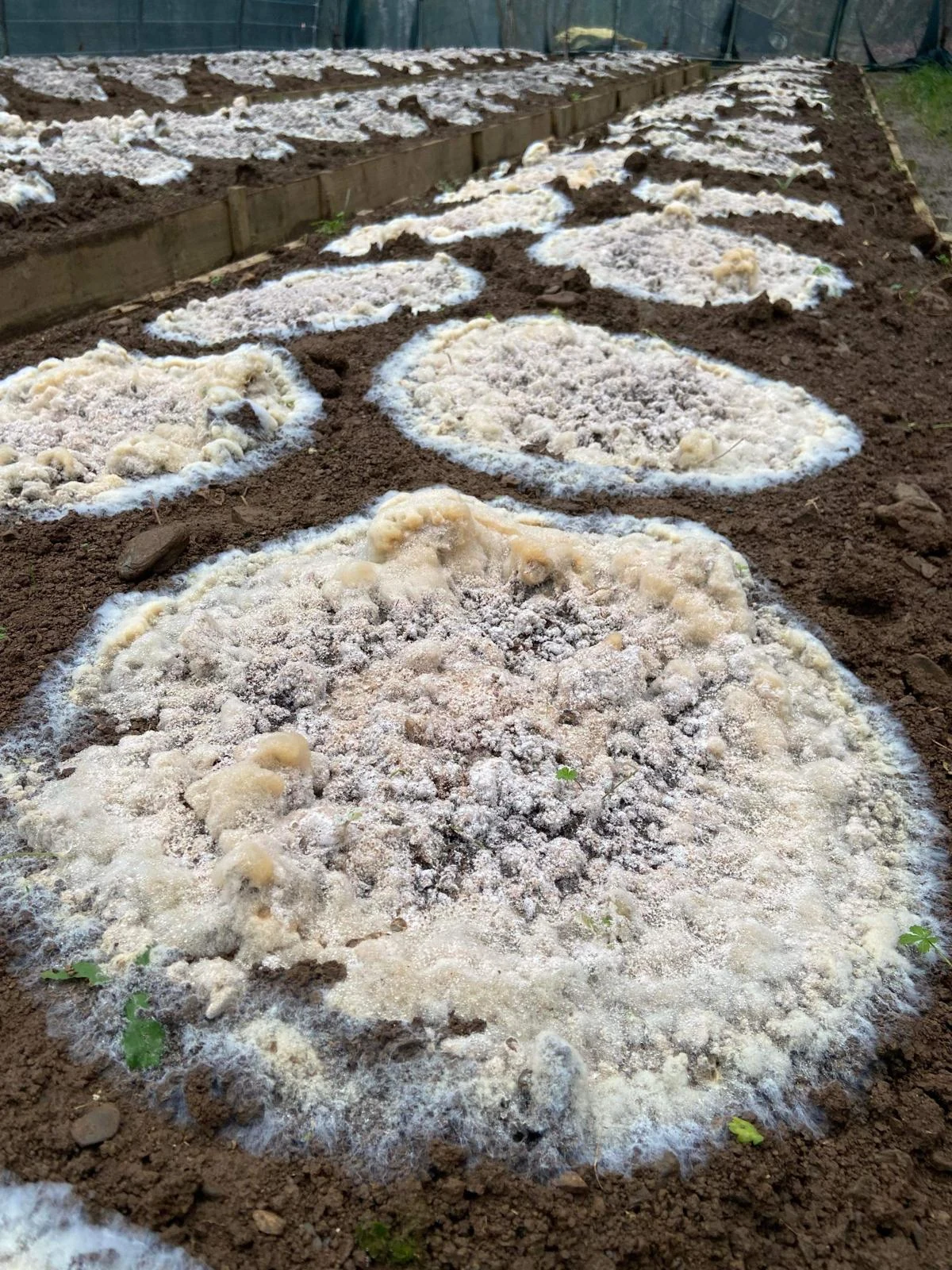
GARDEN PODs · ONE MONTH OF INCUBATION
Large spreading patches are spread around the cultural points. The overview reveals their magnitude and repetition on the beds.
What we see here is the development of mycelium. The formation of the morels comes in a later phase.
After laying, the mycelium emerged from the PODs and colonized the surrounding land. The white areas that spread around the growing points are the "spreading patches": they make part of this growth visible.
Observe their borders and extension on the bed. The detailed photographs below identify filaments; the opening view shows spreading patches of PODs garden after a month.
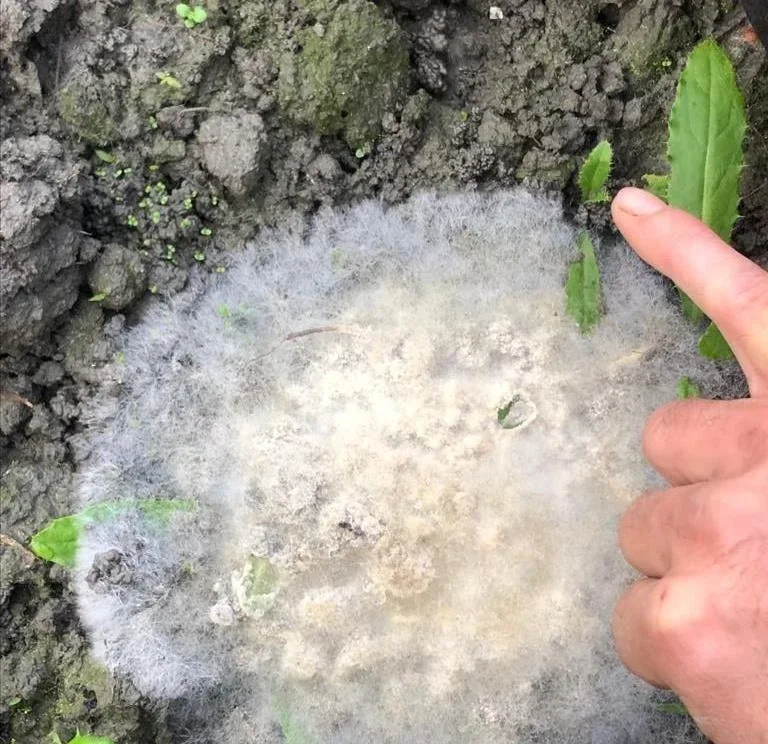
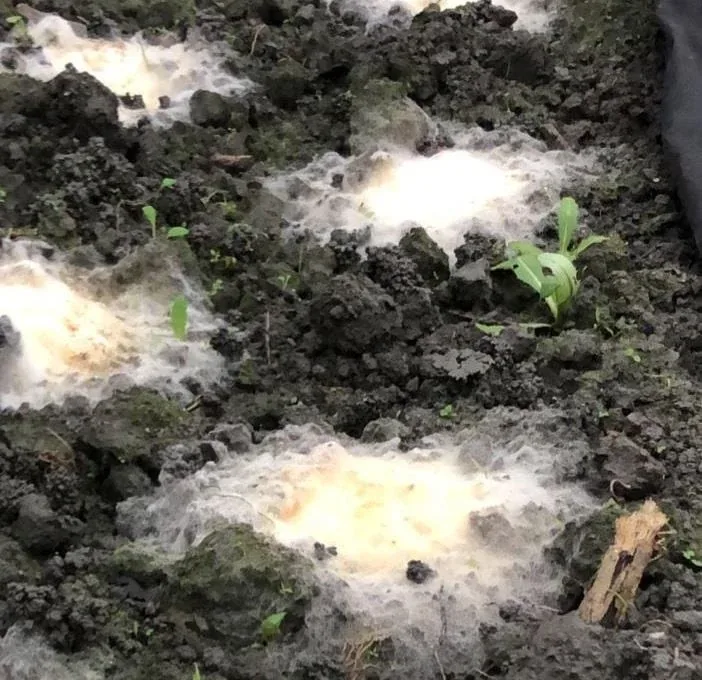
Compare observations over the days. Land, water and temperature vary the rate of colonization: the following benchmarks help to read the progression.
Progress can remain underground. The absence of visible down is not sufficient to conclude a failure. Temperature, humidity, organic matter and calcium influence this step.
During active expansion, the objective is to maintain a welcoming land near the surface. Cross the observation of the bed with the monitoring of humidity and temperature.
If autumn is dry, bring the water through the aisles before the surface crusts. Water wins beds by capillary.
Adapt water intakesAvoid washing the expanding mycelium directly. Do not let the surface dry: its growth could continue mainly in the basement.
Follow humidity and temperatureIncubation follow-up actions are common; nutrition then distinguishes between the two routes.
PODs JARDIN
The POD garden has its own nutrition. Exogenous cereal bags are not necessary for their operation. Continue to monitor the progress of the mycelium and the state of the bed.
Understanding both POD formatsPODs PRO
Prepare the connection after 7 to 15 days, when the spreading patches reach 10 cm diameter. Watch the development around each POD before placing the bags.
See login practicesGESTES IN VIDEO
Observe mycelium and reservesWatch on Facebook