The ground is warming up
Measure in the morning, at 10 cm depth. Compare several measurements, the reference points of your species and the coming weather.
 Ceramyca
CHAPTER 20 / 23
All chaptersAs soil warms, prepare the water supply, watch for a false start and maintain humidity around the first emerging morels.
Temperature alone does not decide the triggering watering. Cross its evolution with the soil moisture and the state of the crop, following the maturation of the sclerotia.
Importuna and Eximia follow the same autumn-spring cycle. Rufobrunnea, sown on the first day of summer, follows the autumn cooling: observe its plot according to this separate calendar.
Measure in the morning, at 10 cm depth. Compare several measurements, the reference points of your species and the coming weather.
Observe the earth and the circulation of water. A punctual saturation should not become a lasting stagnation.
Cross these measurements with the state of the plot and the observations made during maturation.
STARTING POINTS FOR HARVEST · SOIL TEMPERATURE
To be measured in the morning, 10 cm below the surface. The temperature of the air under the tunnel corresponds to another measurement.
An unexpected warming at the beginning of the season can quickly warm a bed still close to 0 °C a few days earlier. If the forecasts then announce a new episode of prolonged freezing, it is better to slow down this warming to avoid starting fruiting at the wrong time.
Follow the progress of the soil temperature and anticipate: irrigation for climate control must take place before the soil reaches 5 °C. It aims to break the inertia of temperature rise, unlike irrigation which accompanies the emergence of morels.
CLIMATIZER WATERING
Before 5 °CSoil temperature to be checked immediately to take action.
The right moment happens during the ascent. Strengthen the monitoring from the beginning of the warming, with readings comparable to 10 cm of depth. Watch the trend to act before the threshold, without waiting for the bed to have already warmed up.
Look for the early warming followed by a prolonged freeze. If the ground, recently close to 0 °C, warms up quickly, prepare the intervention before it reaches 5 °C.
Perform a saturation watering directly on the bed by drawing water from cold water. The objective is to lower the temperature of the soil and slow down its warming.
Check the drop in temperature after feeding, then monitor its evolution during the cooling down. It is the monitoring of the soil that allows to anticipate a new acceleration.
Moisten the plot abundantly taking into account the water reserve in the soil and its reaction to watering. Check the paths after application.
Check the water status of the bed and the proper functioning of the irrigation before thoroughly humidifying the plot.
Then let the soil accumulate the heat of the day, then gradually return it with evaporation.
The puddles in the walkways should disappear within a few hours. If the water stagnates, check its drainage before renewing the supply.
Measure the atmosphere where the morels develop: 10 cm above the ground, in the shade. Keep the same location and measurement slot to compare the readings.
Sandy or lime soils may require special attention to the cover to maintain this humid atmosphere. Adjust the coverings with the weather and the measurements of the plot.
AT THE START
≈ 85 %Humidity of the air
THEN DURING THE FOLLOW-UP
75–85 %Humidity of the air
On the vegetable side, keep the transparent plastic cover already installed under the white fabric since sowing and the introduction of bacteria. The white fabric remains folded, to be temporarily restored in case of rain of more than 10 mm, wind or frost. On the garden side, switch from two layers of fabric to a single layer of black; put back the two layers during inclement weather or frost. Always monitor the heat and humidity.
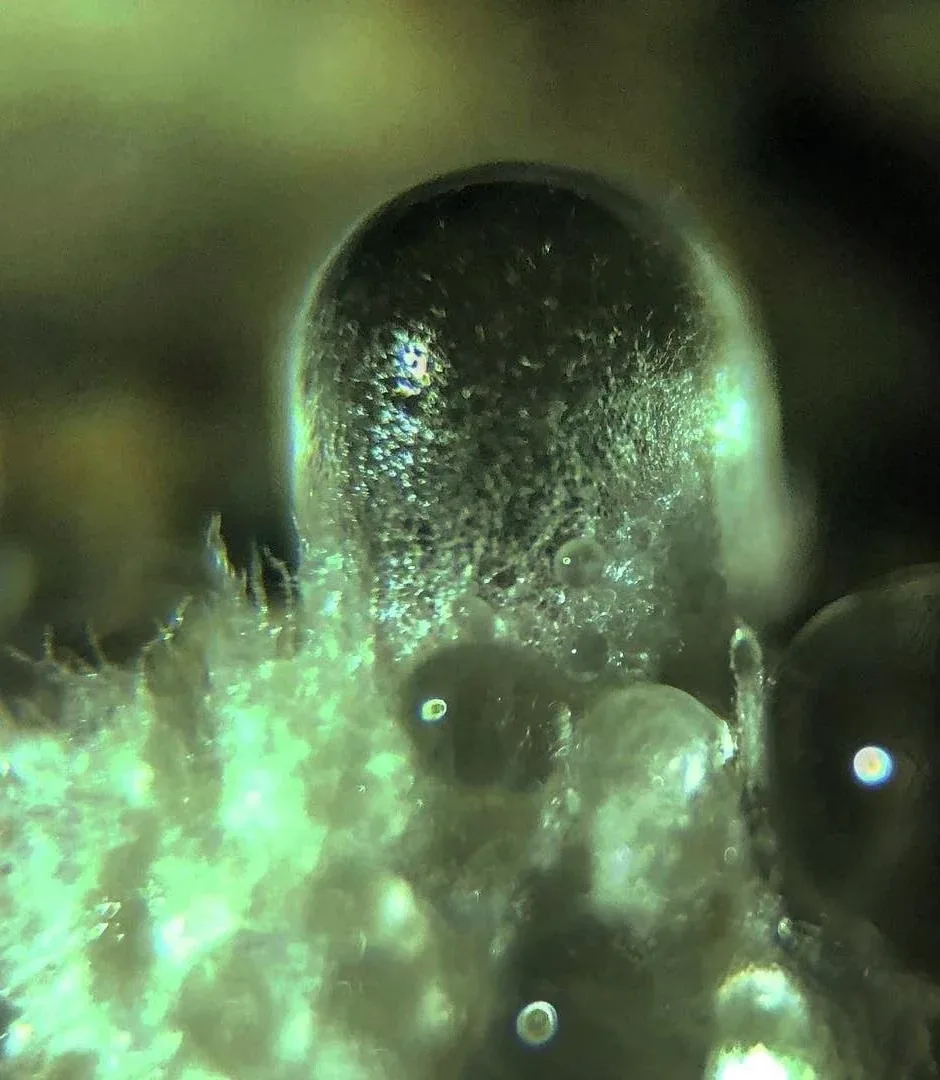
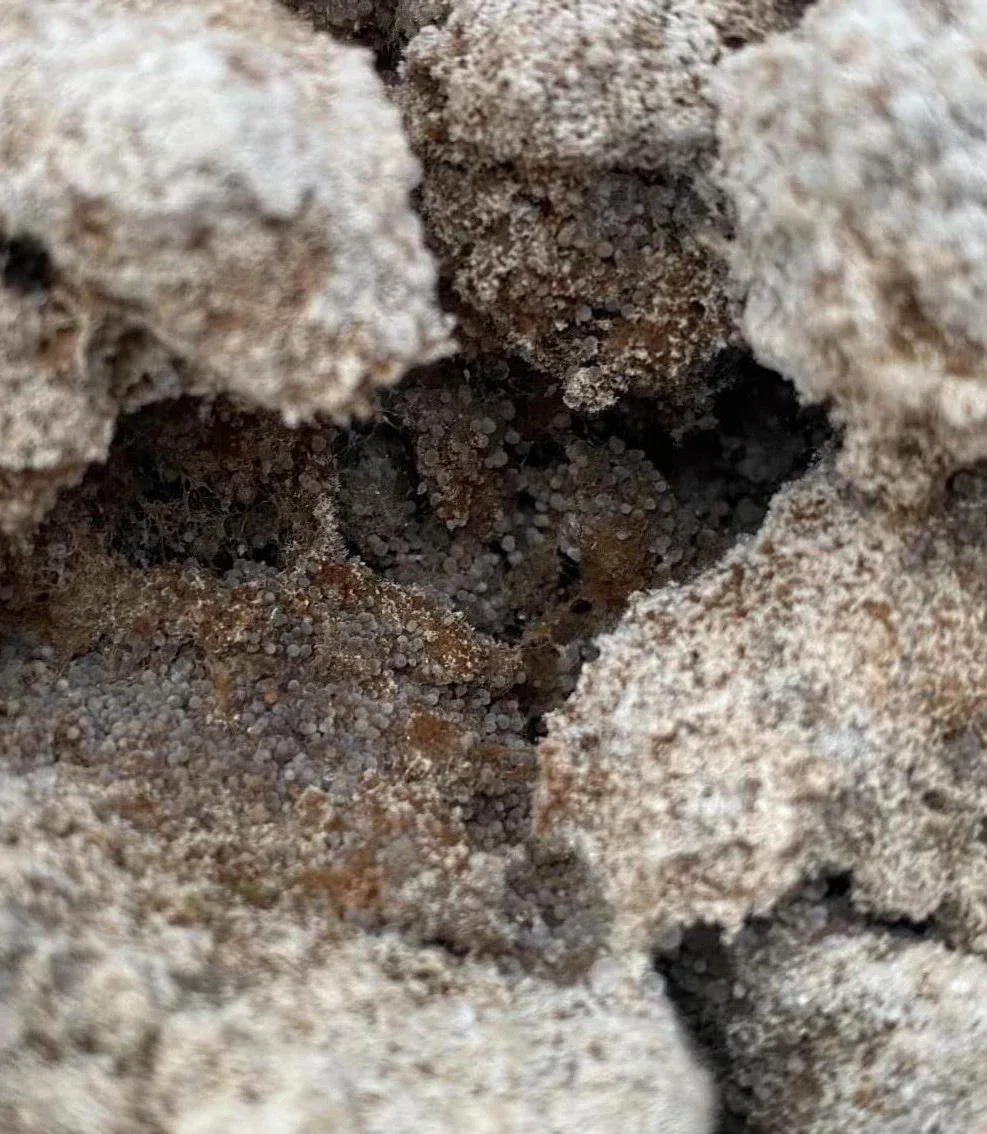
The first reliefs on the surface mark a change in behavior. Look closely, then regularly return to the same areas to follow their development.
WHAT IS A PRIMORDIUM?
Observe the surface closely, without stepping on the beds. Find the small reliefs that emerge between the particles of the ground, then follow their evolution from day to day.
GESTES IN VIDEO
Accompany the onset of fruitingWatch on Facebook