Growing morels and sharing what we learn. Why the POD?

A HISTORY OF PATIENCE AND CURIOSITY

One mushroom.
Generations
of researchers.

From the terracotta vessels in early accounts of mushroom growing to today’s morel beds, one question connects the generations: how do mushrooms grow, and how can we help them along?

The story often begins below the surface.
01Antiquity
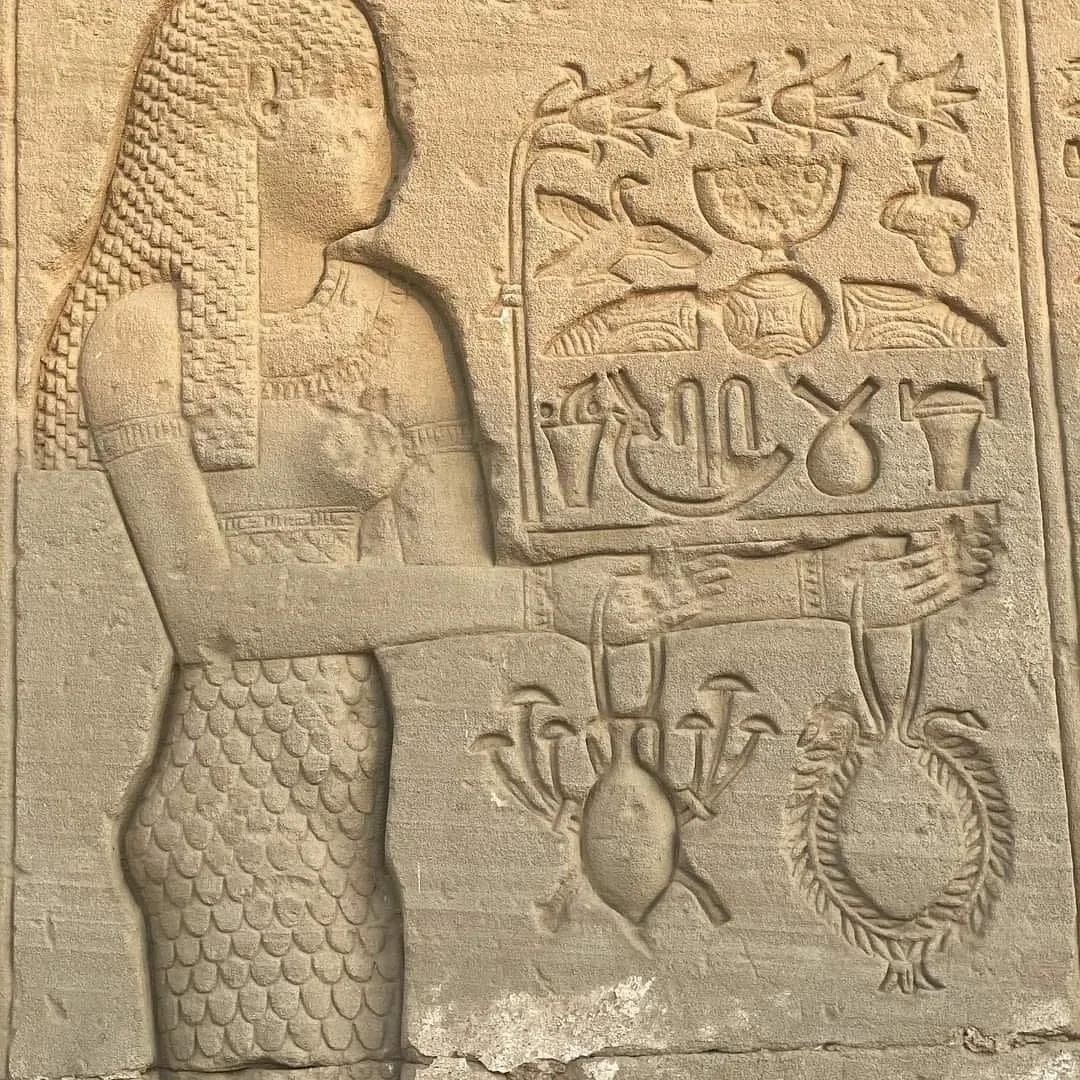
A carved scene inspired by antiquity, with a figure, vessels and mushroom-like motifs.
An artist’s impression of an ancient growing vessel.

TERRACOTTA IN EARLY MUSHROOM GROWING

Before morels: ceramics and mushrooms

« As far back as antiquity, Europeans used terracotta amphorae to grow mushrooms such as the poplar mushroom. »

Jérôme Legros, mycologist

Long before growers experimented with morels, people tried to grow mushrooms close to home. Ancient accounts describe using poplar wood and water and watching for flushes. The Geoponica, a collection of agricultural writings, records attempts to produce mushrooms on a stump.

The poplar mushroom is part of that earlier history. Mycologist Jérôme Legros describes the use of terracotta amphorae, vessels shaped by hand to support mushroom growth. That use of clay finds an echo centuries later in Ceramyca’s work.

Ceramyca drew inspiration from the material and the way growers worked with it. Morel cultivation developed its own methods much later, from preparing spawn and providing nutrients to understanding what makes the mushrooms fruit.
021872–1936
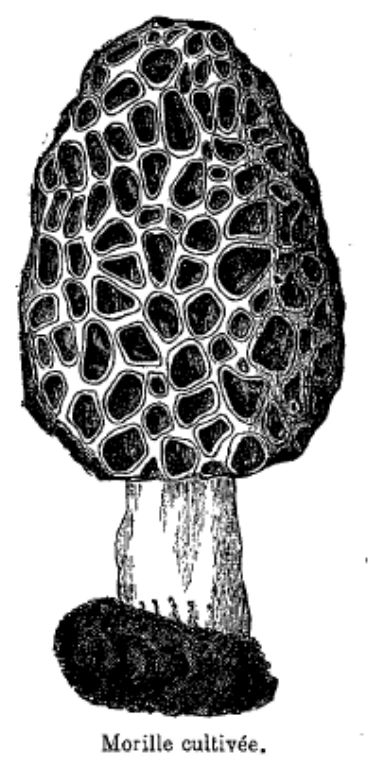
An old engraving of a morel with its pitted cap and stem, captioned “Cultivated morel.”
“Morille cultivée” (“Cultivated morel”), an illustration from the baron d’Yvoire’s 1889 article.Revue des sciences naturelles appliquées, January 5, 1889, p. 19. Reproduced in Raphaël Boichot’s compilation La culture des morilles — Histoire ancienne, p. 5.

THE FIRST EXPERIMENTAL GARDENS

The dream of cultivating morels

Long before bags of spawn and shaded greenhouses, gardeners and botanists were trying to coax morels into fruiting. Published accounts date back to 1872. In 1889, the baron d’Yvoire described introducing morels into a kitchen garden in spring and adding apple pomace in fall.

Word of these trials spread from gardens to scientific societies. In a 1901 article, Dr. Charles Repin described watching mycelium grow in tubes containing decayed wood and leaf mold. He could observe the fungus growing, but producing morels was another matter.

Repin reported a few morels in May 1900 near a bed established eight years earlier. The following year, he saw more near trials set up five years before. Such long intervals tested the pioneers’ patience and made it difficult to link any particular action to a harvest.

In the early 20th century, Marin Molliard studied how to grow the fungus and the forms it takes. As late as 1936, Jean Costantin reported trials with buried organic matter. The researchers took their cues from nature, but their results remained difficult to repeat.

These early experiments helped open the field. Their methods belong to their time. Ceramyca does not use the apples or fresh organic matter from these trials when preparing its growing beds today.

031982
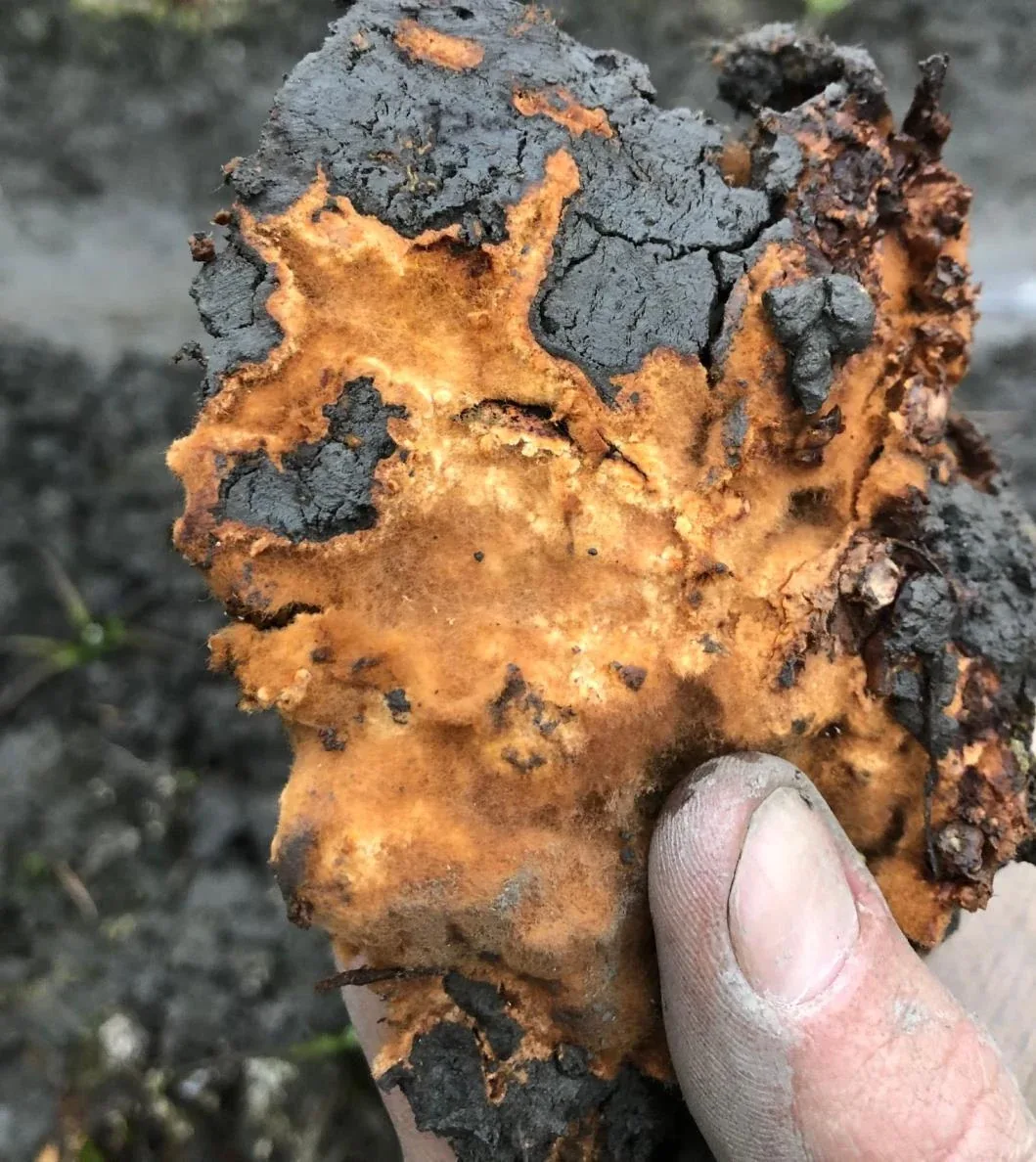
Sclerotia store the mycelium’s reserves.

A TURNING POINT

Fruiting becomes a focus of laboratory research

In 1982, Ronald Ower published an account of morels fruiting in cultivation. Researchers now had a way to study the transition from mycelium to mushroom under controlled conditions.

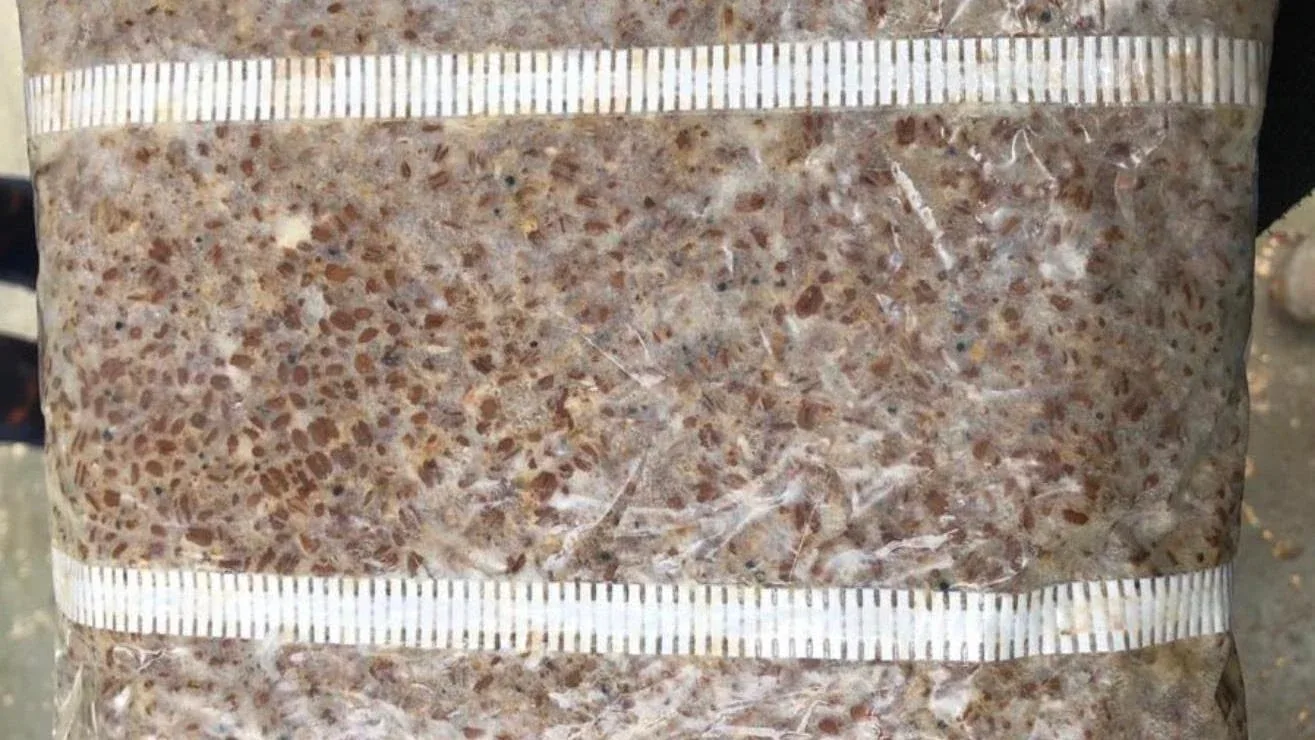
The sclerotia, which serve as storage structures, became central to the research. Where does the mycelium find nutrients? Where does it store them, and when does it draw on those reserves?

The difference between a nutrient-rich medium and a poorer one became an important line of inquiry. Growing the mycelium was only the first part of the challenge.

041985–1986
Mycelium growing on a nutrient medium.

DEVELOPING A REPEATABLE PROCESS

Ower, Mills and Malachowski: from breakthrough to process

Ronald D. Ower, Gary L. Mills and James A. Malachowski filed a U.S. patent application on April 29, 1985. Published as US4594809A on June 17, 1986, the patent set out the experimental fruiting process step by step.

The process linked spawn preparation, sclerotium formation, the growing substrate and water management. The challenge was to manage each stage and reproduce the conditions that allowed the fungus to move to the next.

05After 1986
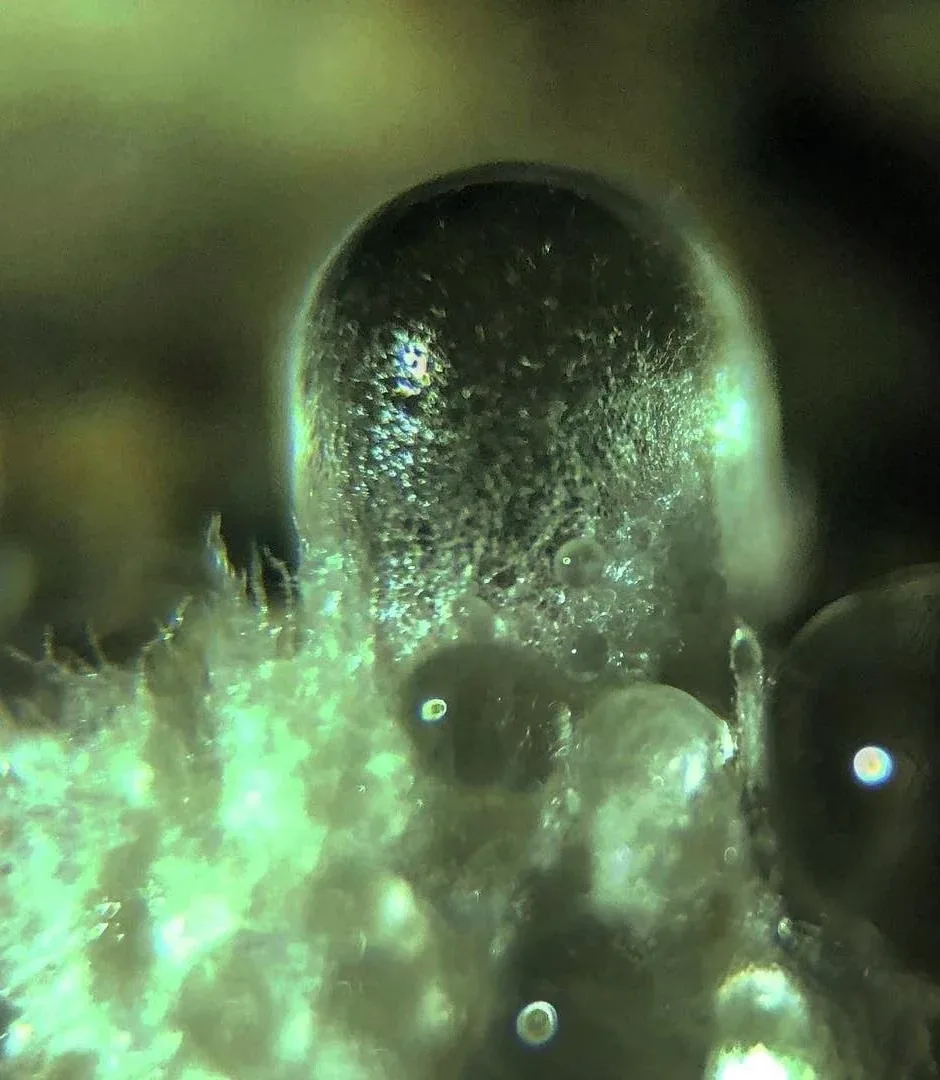
From stored reserves to the first tiny fruiting body.
From stored reserves to the first tiny fruiting body.© Matthew Hall

THE CHALLENGE OF GROWING WITHOUT SOIL

A written process cannot capture every skill

Soilless cultivation uses a sequence of growing media. The fungus builds reserves before moving to a less nutrient-rich substrate. Cold, water and renewed growth then play a part in fruiting.

Even a detailed description can leave out practical knowledge. The strain, its condition and the growing environment all affect whether results can be repeated. Researchers continue to study microorganisms and the differences between laboratory and field conditions.

There is no simple formula for growing morels. Changing one stage may affect what happens months later.

062010–2015
Archive footage of our first trials on a concrete slab and in a garage.Open the video in a new tab

FROM THE ARCHIVES · 2010–2015

Our first experiments, on a concrete slab and in a garage

A concrete slab, a garage and a desire to understand. This footage shows our modest beginnings, when we ran our first morel trials and kept a close watch on what grew.

We have since moved into a larger production facility where we can produce spawn and bacteria in volume and support morel growers as the industry develops.

The site and the scale have changed. Curiosity about what happens in the soil, together with what we learn in the field, still guides the work.

072019–2020
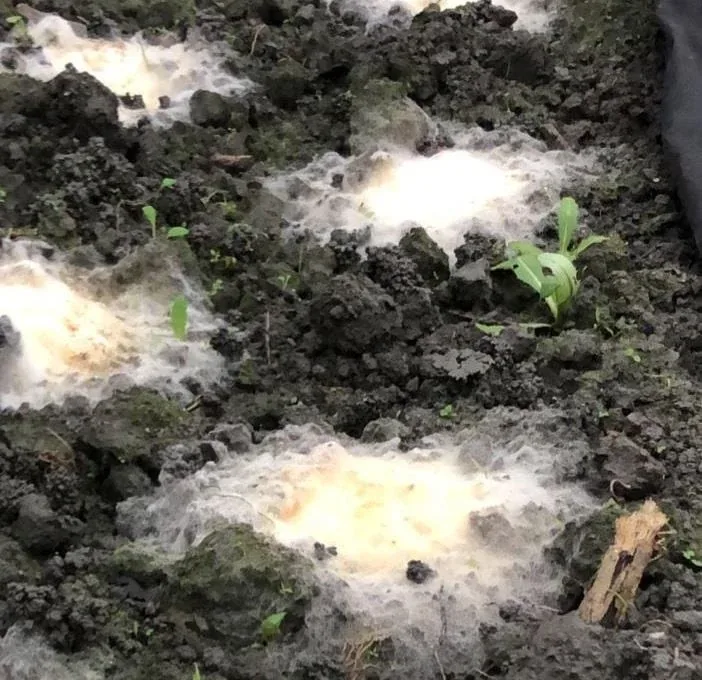
Watching the same patch develop over time.

WHAT UNSUCCESSFUL TRIALS TAUGHT US

Healthy-looking mycelium tells only part of the story

These trials brought a persistent challenge into focus. Vigorous mycelium and abundant sclerotia do not always lead to the harvest growers hope for. What happens out of sight matters as much as the encouraging signs at the surface.

We began paying closer attention to how spawn was stored, its age and the planting date. A season’s records let us revisit the actual growing conditions and put an isolated failure in perspective.

Photographs, temperature readings and notes about work in the beds give us a clearer picture. Even a season without a harvest can help us plan the next one.

082021
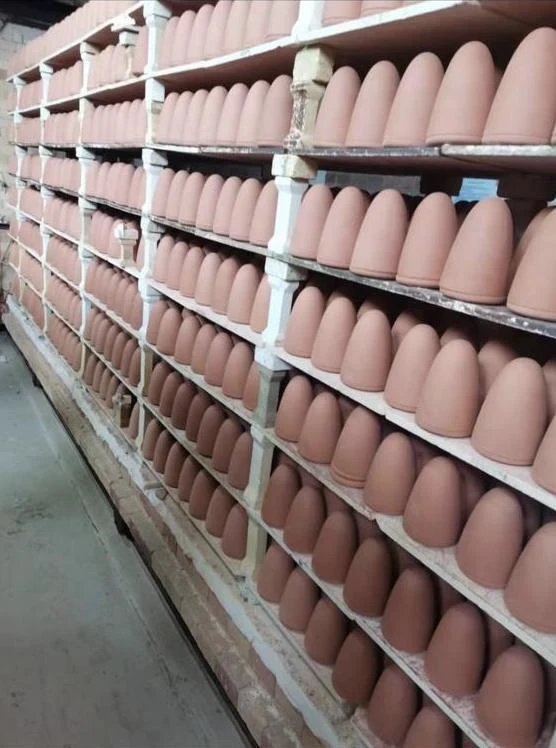
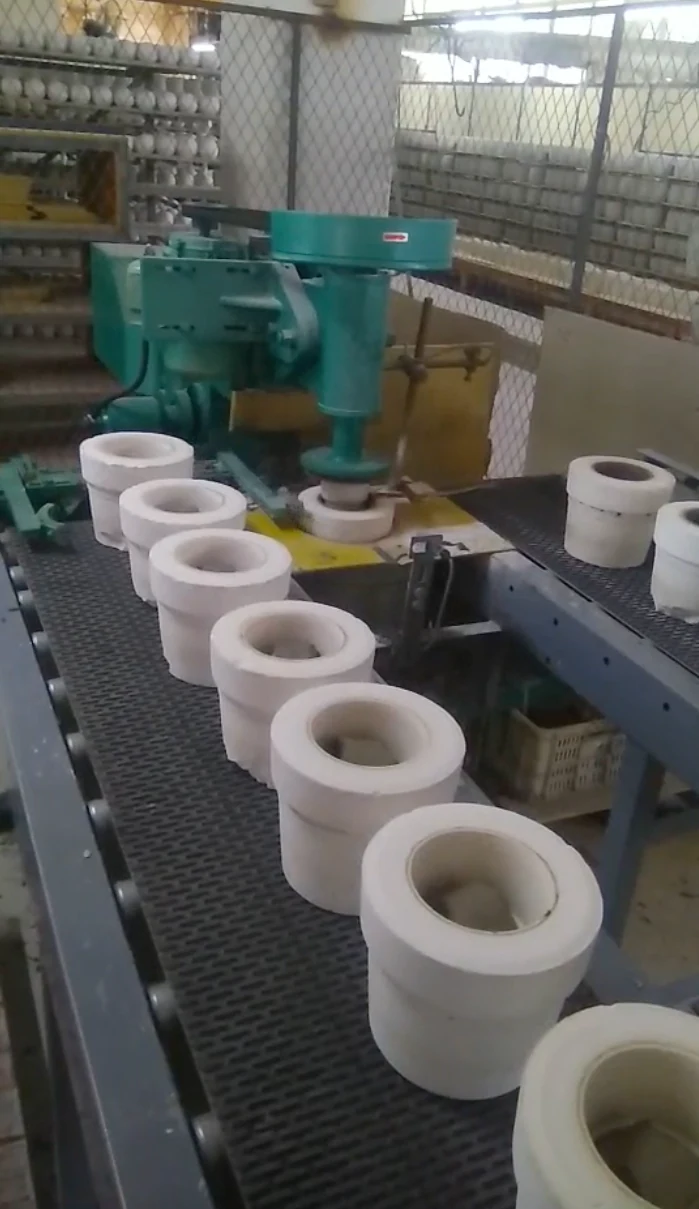
Early batches of ceramic PODs lined up on the pottery workshop shelves.
Making the first batches of PODs, from throwing the clay to firing it like a traditional olla irrigation pot.

MAKING THE FIRST PODs

The first PODs take shape

The first ceramic PODs took shape on a potter’s wheel. As the clay turned, the potter hollowed out each vessel and drew up its walls by hand.

After shaping and drying, the pots were fired using the same method as traditional olla irrigation pots. This kept the terracotta porous, a feature the POD needs.

From the potter’s first vessels to early production runs, the aim was the same: to use ceramics to support mycelium and the bacteria that live in the soil.

09Today
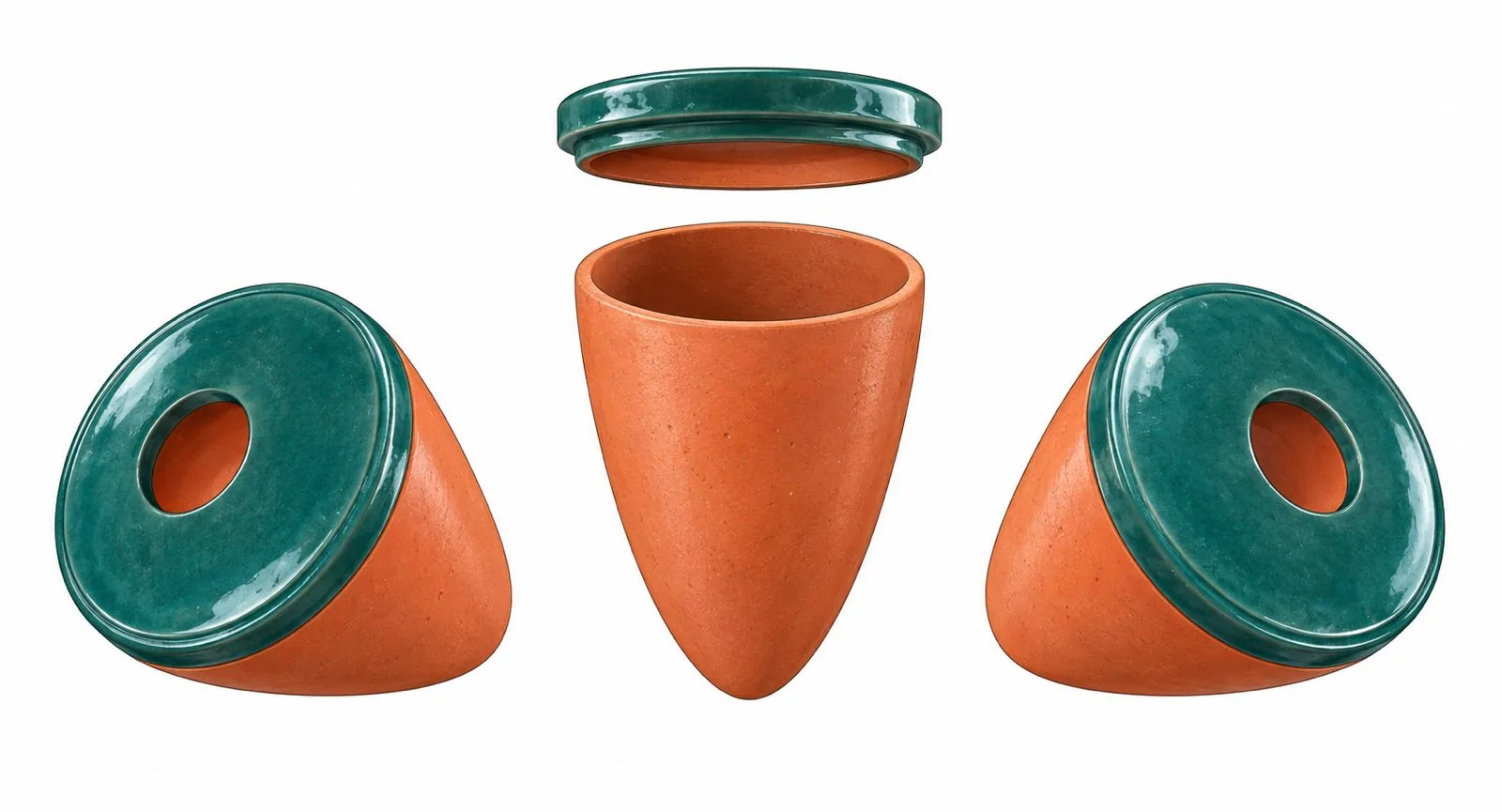
Ceramyca terracotta garden PODs with green lids
Ceramyca garden PODs. The range also includes the POD PRO for larger growing areas.

THE CERAMYCA APPROACH

Terracotta meets living soil

Ceramyca builds on this history with a probiotic approach. The POD brings together a nutrient source, the mycelium and beneficial bacteria in the soil.

Its porous terracotta houses bacteria that work alongside the mycelium. The lid guides the growing mycelium toward the surface. At the end of the season, growers dig up the vessel, empty it and prepare it for reuse.

Garden PODs contain their own nutrients, while PODs PRO use separate nutrient bags. From choosing the soil to reusing the ceramic vessels, growers learn to manage a full season in the garden or on the farm.

THE STORY CONTINUES IN YOUR GARDEN

Understand how morels grow.
Learn to grow.

These centuries of curiosity lead back to one simple question: what does a morel need in this particular soil? Follow the growing season from the bed to the harvest.