A porous ceramic
The porosity allows for the exchange of water and gas with the surrounding environment. It accompanies the management of moisture, without replacing the drainage of an engorged soil.
 Ceramyca
WHY THE POD?
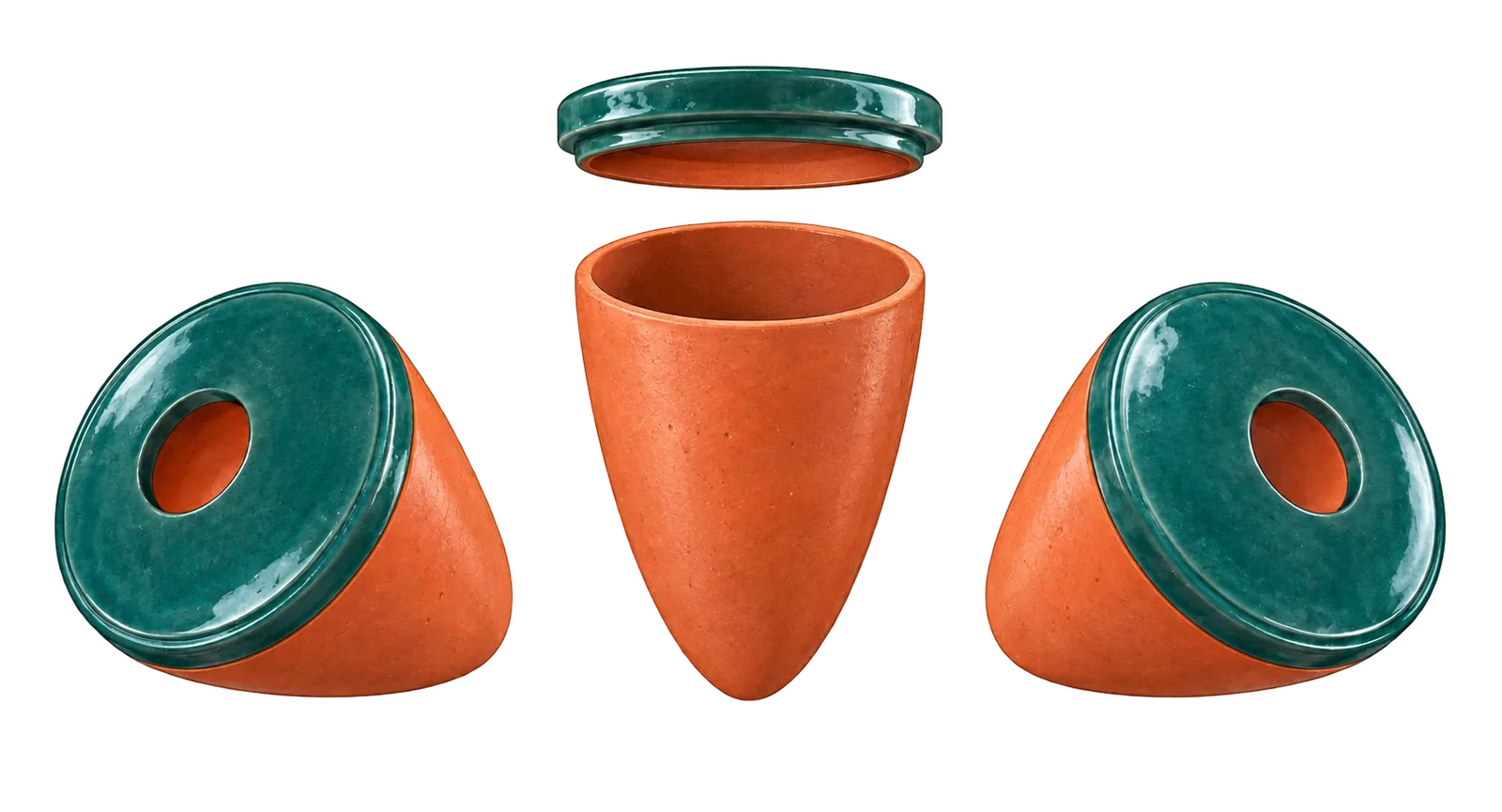
Direct the mycelium to the surface, connect its food and preserve useful bacteria between two seasons: the POD organizes relations between the morel and its soil. Ceramics becomes a culture interface and then recovers.
Reserves near the surface.
Contact in the right place.
L的inoculum withdraws out of season.
CHOOSING YOUR GROWING APPROACH
The difference is not only with the container. It concerns the direction of mycelium growth, the position of its reserves and what is left in the soil at the end of the cycle.
| In practice | Traditional sowing | With a POD |
|---|---|---|
| The growth direction | From sown grains, the mycelium spreads at 360°, including deep. | The opening directs the mycelium to the surface, where fruiting is prepared. |
| Energy and sclerotia | Growth is dispersing; part of the reserves can be formed too deeply to be well placed. | The start is oriented to limit the dispersion of effort and favour sclerotia close to the surface. |
| Off-season L. | Grains remain mixed on the ground after cultivation; their separate removal is difficult. | The POD withdraws after harvest with the initial support it contains, in an interseason management approach. |
| Exogenous nutrition | The connection depends on the areas actually colonized in the plot. | The POD creates a localized interface: the openings of the nutrient bag are placed on identifiable mycelium points. |
| Bacterial environment | sowing does not provide ceramic interface dedicated to bacteria. | Porous ceramic provides a localized interface between mycelium, soil and bacterial inputs of our protocol. |
| Next cycle | The initial nutrient medium cannot be removed separately from the soil. | Ceramics are recovered, dried, emptied and prepared to receive new mycelium. |
The POD facilitates the organisation of culture. Soil, strain, water, shade and temperature remain critical to harvest.
IN THE HEART OF OPERATION
Mycelium explores and links two media: a concentrated nutrient reserve and a relatively poorer soil. It accumulates resources and then constitutes sclerotia, the reserve structures that prepare fruiting.
In a traditional sowing, the mycelium explores 360°. This dispersion mobilizes its resources and can place sclerotia too deeply. With the POD, the starting food stays in the ceramic and the lid opening directs the exit to the surface. The aim is to concentrate this departure in the area where fruiting is being prepared.
Removing the POD allows to remove the initial inoculum with the nutrient media remaining in the container. This practices is part of our conduct of interseason; it does not remove the mycelian network that has already developed in the earth.
The nutrient medium carries the mycelium and feeds its departure.
The mycelium comes out through the opening and explores a poorer environment.
Sclerotia are formed. Cold, water and light accompany the cycle.
PROBIOTIC APPROACH CERAMYCA
Bacterial life is part of our itinerary. We attach particular importance to the Pseudomonas putida, the presence of which varies according to previous soils and crops.
Ceramics provide an interface to mycelium and soil contact. We associate bacterial inputs into our cultivation route. Interactions between morelles and Pseudomonas The effects of these strains and conditions are documented, but they vary according to the strains and conditions: their presence alone does not guarantee fruiting.
The bacterial intake settles after organic preparation, by watering the day before sowing. Ceramics, mycelium and soil then participate in the same culture medium.
Understanding probiotic preparationTHINK ABOUT THE NEXT SEASON
PODs are designed as an interface between mycelium, bacteria and soil. Ceramyca ambition: to better organize each cycle in order to be able to carry on the crop, rather than thinking only about the first harvest.
Exploring the scientific landmarks ▼Successive tillage can be accompanied by chemical and microbial changes in the soil and a decline in production. Some bacteria are declining, others are taking more place: it is a change in equilibrium, not necessarily the disappearance of the microbiota. Work on Morchella sextelata document these developments [1].
In our field observations after sowing in poquets or furrows, returning to a favorable plot may take several years. This duration varies according to the historical and state of the terrain. Lime treatments are one of the practices to be examined; sharp or extinct lime should not be confused with calcium carbonate used to adjust pH.
The ODP keeps the starting inoculum in a recoverable container. Its opening directs the exit of the mycelium towards the surface layer: this is the first interest of the device in our conduct, with the aim of encouraging the formation of reserves near the fruiting zone.
Sclerotia are reserve and survival structures. Their future depends on the conditions of cultivation: the POD does not guarantee that they all form at the same level, or that they all participate in fruiting or disappear completely after it.
The porosity allows for the exchange of water and gas with the surrounding environment. It accompanies the management of moisture, without replacing the drainage of an engorged soil.
The Ceramyca patent describes a favourable role of terracotta iron oxide in the presence of certain bacteria [2]. This proposed mechanism does not mean that iron systematically attracts all bacteria from all soils.
The bacterial amendments accompany our protocol, with renewed inputs at the planned stages. The aim is to support the populations sought in soil and contact with the PODs. Their installation also depends on the environment and the organizations already present.
THE CERAMYCA CYCLE OF CONDUCT
Choose a suitable bed, prepare the floor and make the intended inputs.
Sow in POD, accompany incubation and fruiting conditions.
Recover the ceramic with its inoculum and the nutrient support it contains.
Observe the condition of the plot, prepare the PODs and leave with new mycelium.
INCLUDING THE LIVING · CONSULTING SOURCES
Experimentation · Morchella crassipes
Pion and colleagues found that the mycelium disperses Pseudomonas putida, feeds the bacteria through its exudates and subsequently takes up carbon from them. Carbon-13 tracing documented this exchange and improved resistance to stress in the mycelium.
An experimental support to the interest of a mycelium-bacteria interface. The result concerns the pair studied in the laboratory; it does not automatically transpose to each species of morel.
Nutrition · Morchella importuna
Tan and his colleagues analyze the decomposition of nutrient bags: mycelium degrades notably starch and cellulose. Organic carbon increases in surface soil and is consumed during fruiting. In this trial, no fruiting takes place without bags; their early withdrawal, at 15 or 45 days, reduces yield.
This work sheds light on the value of a sufficiently prolonged diet in our POD Pro driving. They describe substrate degradation and carbon transfer during cultivation, not post-use composting of bags. They don't evaluate the ceramic device.
Observation in greenhouse · Morchella sextelata
Benucci and his colleagues are analyzing morels and the soil under their fruitings. Pedobacter, Pseudomonas, Stenotrophomonas and Flavobacterium are part of the bacterial microbiome common to the fruiting studies. These genera are also abundant in the soil under the morels.
This study anchors the morel–bacteria association under growing conditions. It identifies potential partners; it does not test the effect of Pseudomonas putida on fruiting.
Successive crops · Morchella sextelata
The study observed a decline in production in the second year, more sick fruitings and changes in soil chemistry and microbial communities. Microbial diversity is increasing: the problem is a change in balance, not a soil that has become lifeless.
A basis for thinking about management between two seasons and following the culture environment. The study does not compare PODs to traditional sowing.
Microbiome · Several species of Morchella
Analyses of fruiting, mycelium, and sclerotia identified Pseudomonas among bacteria frequently associated with morels. However, laboratory confrontations revealed neutral or antagonistic interactions among isolates.
The presence of a bacterium is not sufficient to prove a benefit. This study highlights the importance of selecting strains and verifying their compatibility with mycelium.
Growing trial · Morchella importuna
Yu and his colleagues test Pseudomonas chlororaphis in a soil affected by white mould disease. Inoculation reduces Paecilomyces penicillatus-related disease and is accompanied by increased yield.
A demonstration of the potential interest in acting on the microbiota in culture. The bacteria and protocol tested are distinct from Pseudomonas putida and Ceramyca products.
Historical benchmark · EP0221157B1, published in 1990
The process describes a phase of mycelium nutrition and reserve formation, particularly in sclerotia. An external nutrient source, colonized by mycelium, can then be removed. Changes in nutritional availability and hydration contribute to the induction of fruiting.
This patent documents a historic stage in controlled culture and the principle of localized and removable nutrition. It helps to understand the evolution of techniques up to the present devices. Its withdrawal schedule belongs to this process: it is not a universal requirement for modern nutrient bags.
CERAMYCA INNOVATION
The European patent EP4291014B1 describes the ceramic sowing system and its proposed mechanisms: a porous interface, a localized inoculum and interactions with the surrounding environment.
It is the technical source of our explanations on POD, in particular the proposed role of iron oxide.
See patent EP4291014B1 · Text and diagramsTHE GOOD FORMAT FOR YOUR TERRAIN
THE JARDINARY POD
Autonomous in nutrition, the POD garden allows you to start on a small scale. Kits of 3, 6, or 12 PODs provide the starting point; you prepare the soil and accompany the water, shade, and temperature.
No systematic connection of additional nutrient bags. Attention is focused on the ground and season observation.
Choose a garden kitTHE POD PRO
On a large plot, the POD PRO is accompanied by sterilized cereal bags. A 3-litre bag serves two PODs, with openings in contact with colonized areas.
The connection is made when the mycelium extends about 15-20 cm, usually 7-10 days after laying in favourable conditions. This localized interface maximizes contact between bag openings and colonized areas. The POD PRO sinks without a hole, then easily withdraws: a practices that counts when you install hundreds of it.
Preparing a PRO projectGOOD INSTALLATION
For Importuna, Sextelata and Eximia, sow in autumn at 18 °C down, measured under tunnel at the hottest time of the day. Rufobrunnea sows on the first day of summer. Stuff the ground well before laying.
Emit the mycelium in its closed bag and generously fill the POD without cupping.
Plant the PODs in staggered rows in the prepared beds.
Cover the lid with 2 to 3 cm of soil. Level the surface without forming a small mound.
Protect the bed and maintain moisture. Mycelium can develop underground before becoming visible.
2 to 3 cm above the lid. The surface of the bed remains flat.
A POD too high. Adding a mound does not replace adequate burial.
A POD, A ENTRY SEASON
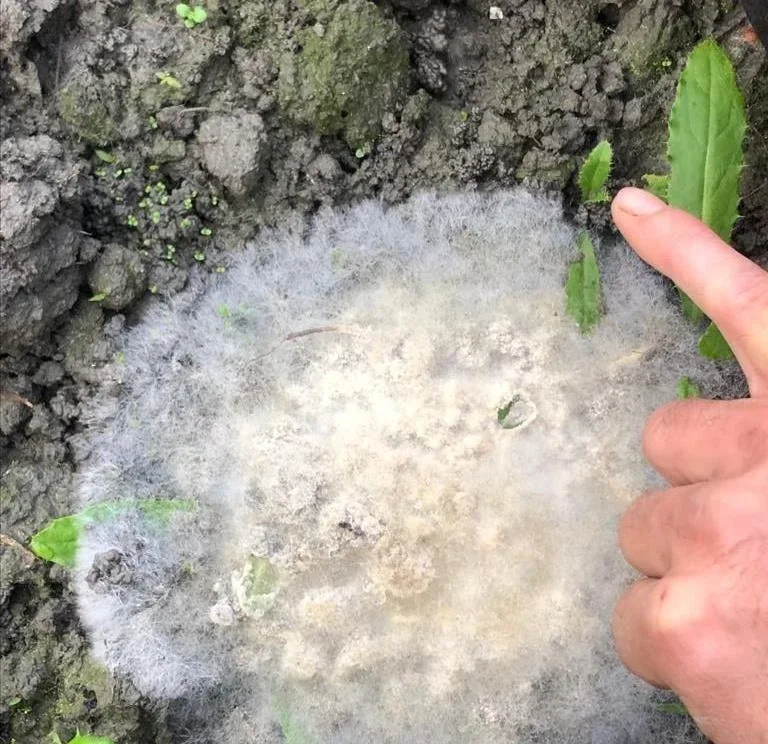
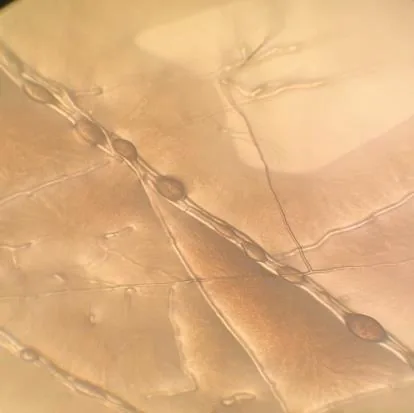
In favourable conditions, the mycelium becomes visible in less than a week. The cold can make its progression more discreet.
Understanding this step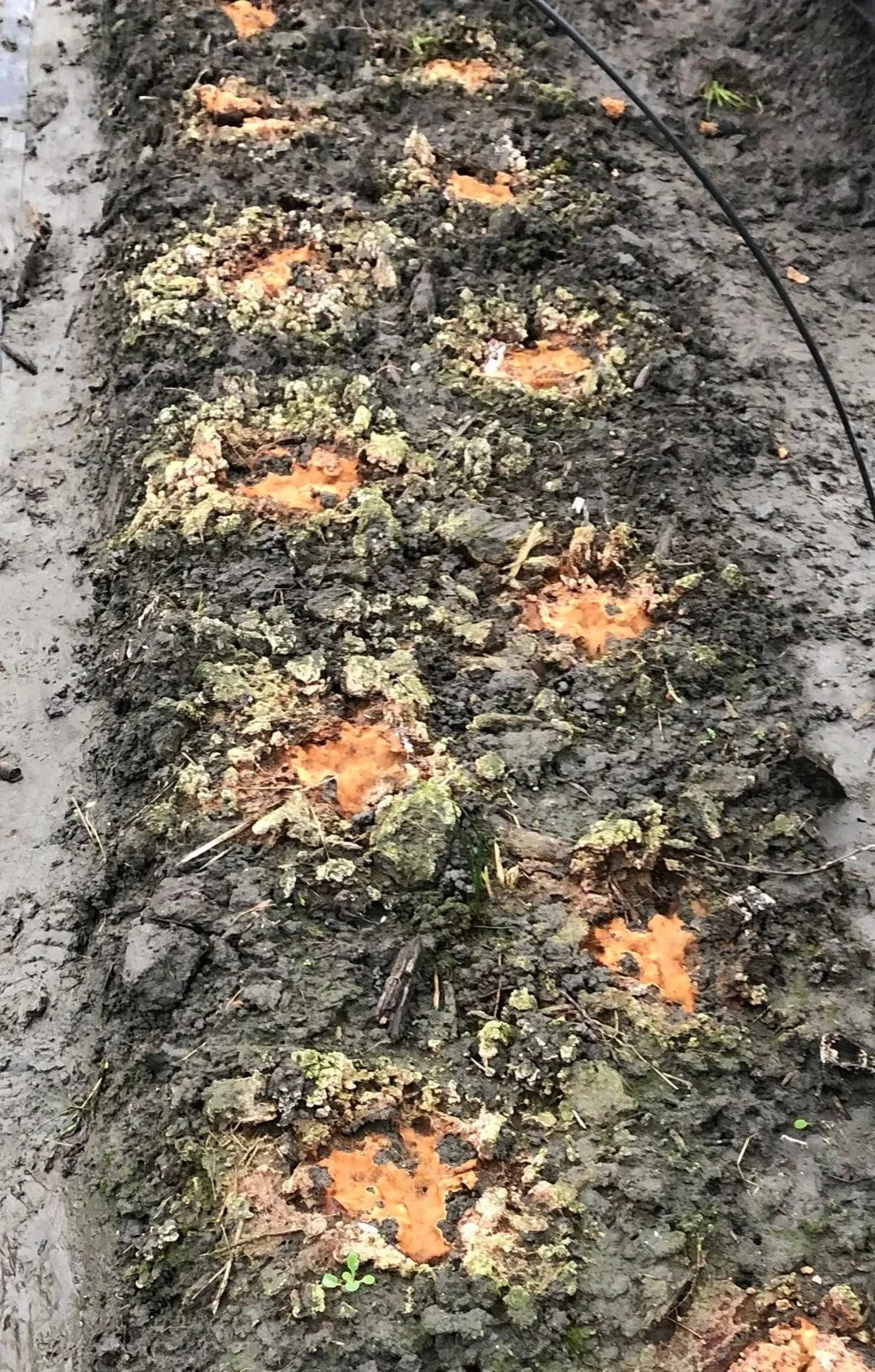
The winter phase transforms the plot. Sclerotia prepare fruiting for a month and a half to four months depending on the climate.
Understanding this step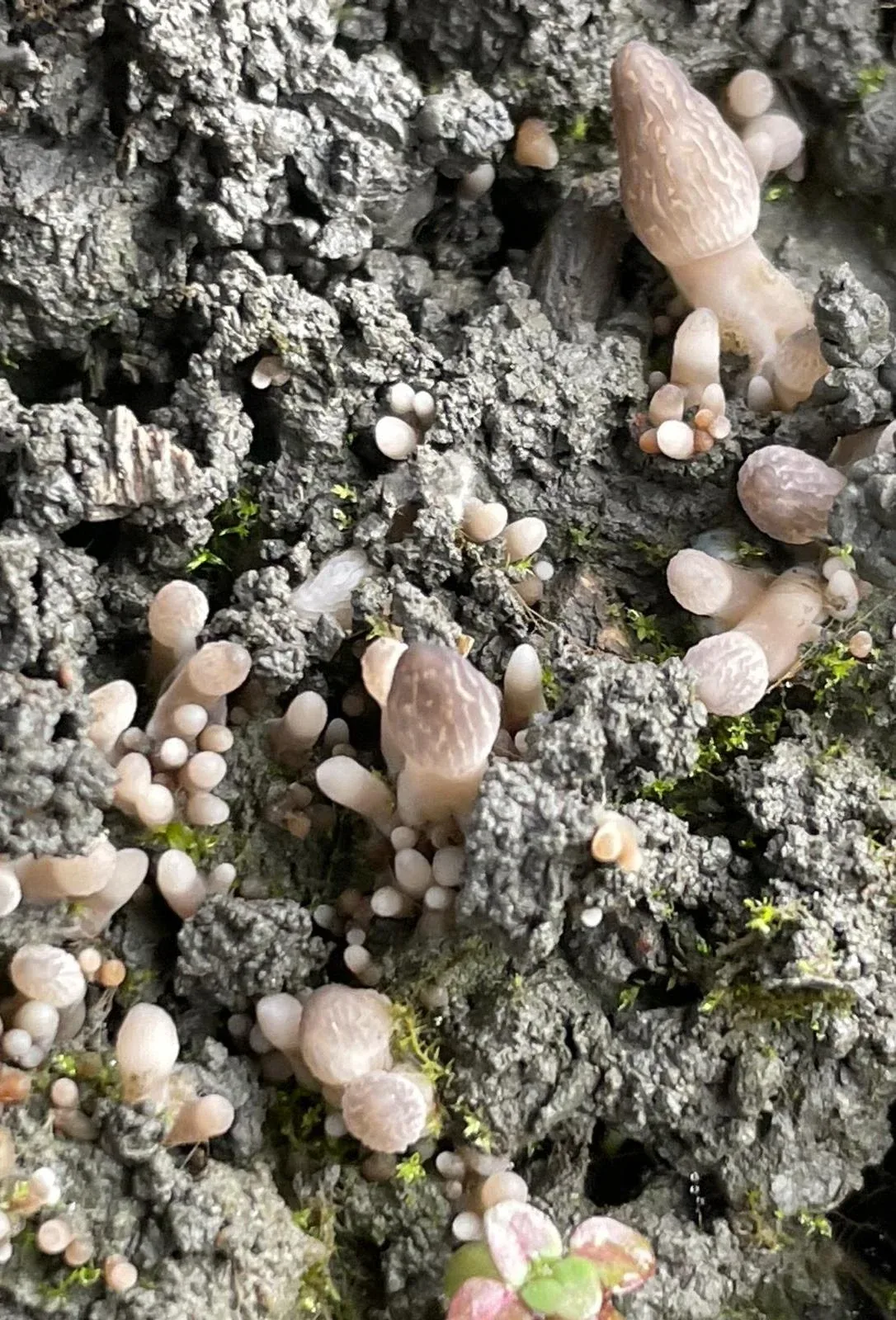
In spring, the beginning of harvest was found at 6–7 °C in the soil for Importuna and 8–9 °C for Sextelata. Accompany the shoots with water, light and protections.
Understanding this stepRECOVERY, RECHARGER, RECOMMENDATION
After harvest, remove the containers and let them dry with their contents, then empty them. The cooked soil is prepared and stored in its packaging to limit breakage.
The next season starts with new mycelium, in the same PODs. The refills allow the containers already in your possession to be cropped again.
OUR AMBITION
Improving production potential, repeating the culture, and preserving the qualities of the morel: these goals take on meaning in the monitoring of each plot.